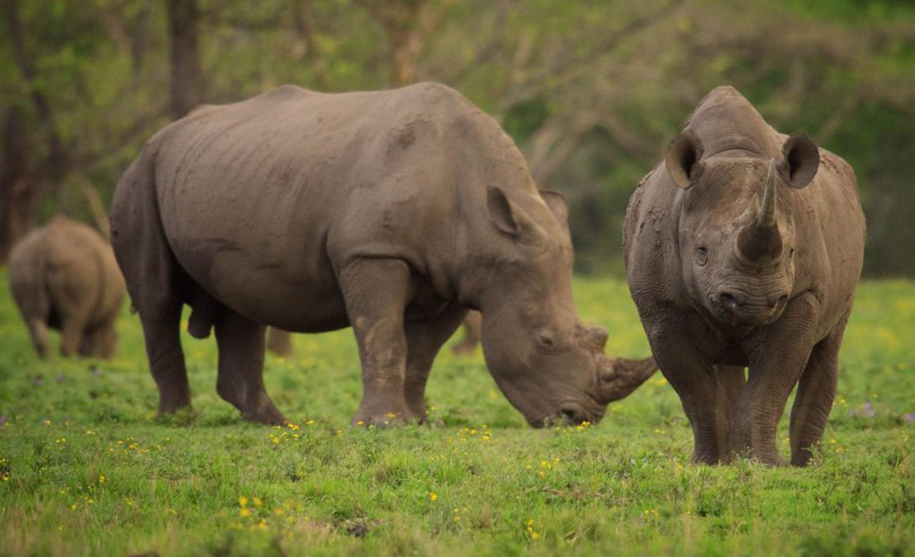
Seven Integrated Wildlife Zones are being introduced across South Africa to protect the country’s rhino.
The introduction of the Integrated Wildlife Zones, similar to the Integrated Protection Zones previously utilized within national parks and provincial reserves, sees an expansion of the effort to protect the world’s largest black and white rhino populations. By introducing a zoning approach, the necessary resources can be redirected to areas most in need of support. It furthermore ensures cooperation between the state and private role-players and is aligned to the objectives of South Africa’s National Integrated Strategy to Combat Wildlife Trafficking.
“This initiative prevents borders and boundaries from inhibiting planning and the implementation of actions aimed at halting rhino poaching and the smuggling of rhino horn,” said the Minister.
The concept is based on multi-party cooperation, but will ensure the use of appropriate technologies to ensure surveillance, early warning and detection — all in an effort to become more pro-active.
“As we celebrate World Rhino Day 2020, we applaud the coming together of key role-players who have joined the national government in our fight against rhino poaching through the utilisation of new, and tested, technologies,” said the Minister.
The Wildlife Zone initiative is supported by the Peace Parks Foundation with funding from the US Department of State Bureau of International Narcotics and Law Enforcement Affairs, and the Dutch, Swedish and UK People’s Postcode Lotteries.
“The Department of Environment Forestry and Fisheries is proud to partner with Peace Parks Foundation, and all the government and non-governmental organisations that will be involved in this on the important initiative,” the Minister added.
Despite the marked decrease in rhino poaching during the Covid-19 national lockdown, the government’s target remains an end to rhino poaching.
“As a key member of the iconic Big Five, we hope that as our provincial borders open more people will be able to travel to our national parks and other conservation areas to experience firsthand our natural heritage, and see these ancient animals in the wild,” the Minister said.
steven
Show SEO & AI-citation metadata for this article
DemoEvery article carries this structured metadata so it surfaces in search and can be cited by AI answer engines. In the back end, a person posting fills these in, or the AI layer drafts them.