For the past few years, a question has circulated through boardrooms and media: are sustainability and ESG dead? Depending on who you ask, they are being abandoned, rebranded, politicised or pressured to prove their value.
By Wendy Poulton, Director, Sustainability and ESG Africa Conference
But climate change has not disappeared because the terminology has become contested. Water scarcity, supply-chain disruption, biodiversity loss, energy insecurity and changing trade requirements remain. Sustainability is arguably becoming more relevant precisely because it is becoming less comfortable.

From reporting sustainability to managing what is material
The first phase of corporate sustainability was dominated by commitments, frameworks and disclosure. Companies became better at measuring emissions, writing reports and responding to ratings questionnaires. That was necessary, but reporting is not the same as performance.
The next phase requires harder questions. What does a water constraint mean for production? What happens if insurance costs rise materially? How exposed is a company to environmental and social risks several tiers into its supply chain? Can it compete where buyers want product-level information about carbon, materials and origin?
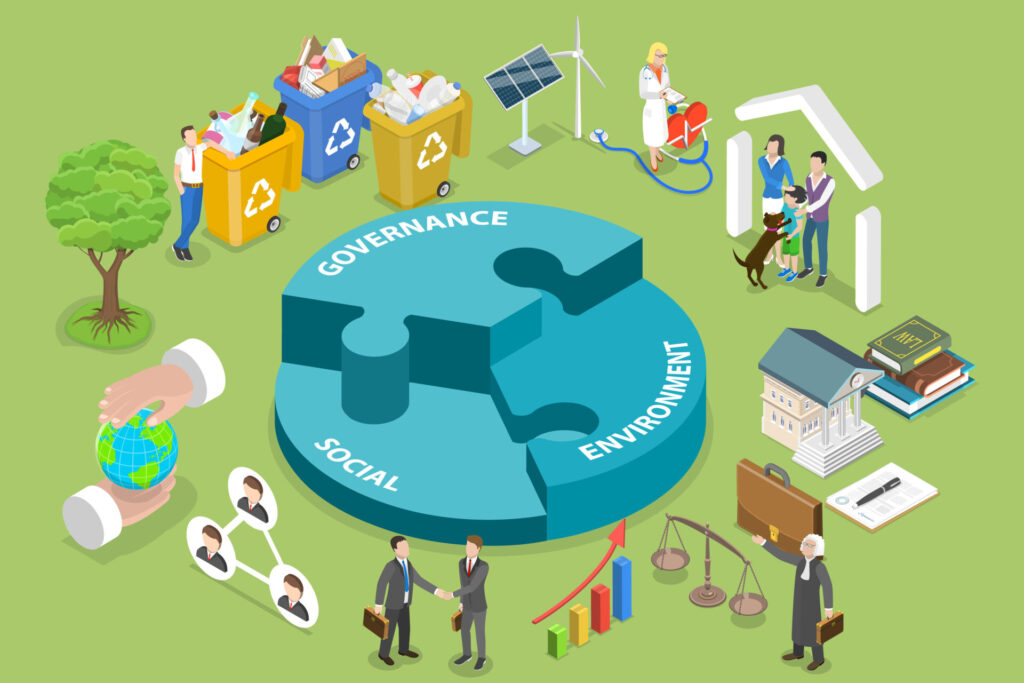
Nature and biodiversity are difficult to separate from business resilience.
Perhaps the most important question is: when does a sustainability issue become significant enough to change a business decision, even if it cannot yet be fully quantified? That is where sustainability moves out of the report and into strategy, finance, procurement, operations and investment.
New sustainability actors: CFO, procurement, ops
For years, sustainability professionals have argued that sustainability should be integrated into business. Increasingly, external pressures are doing that integration for them.
Strategy teams must understand sustainability-related risks and opportunities. Procurement is dealing with Scope 3 emissions, responsible sourcing and supplier resilience. Finance teams are being asked to understand climate and nature exposure and transition investments. Risk teams are grappling with interacting physical, geopolitical and transition risks. Operations face heat, flooding, water shortages and energy volatility, while human resources must consider how AI and decarbonisation change occupations and skills.
Sustainability therefore becomes less of a specialist subject and more a way of understanding how a business will function in a changing environment.

Nature, circularity and supply chains are widening the lens
The sustainability agenda is expanding beyond carbon. Nature and biodiversity are difficult to separate from business resilience. A company may not think of itself as nature-dependent until water becomes unreliable, inputs become more expensive or ecosystem degradation raises operating costs.
Circularity is shifting from recycling towards material efficiency, product design, resource security, localisation and competitiveness. Scope 3 forces companies to look beyond the factory gate: disruption at a critical supplier can become an operational disruption within days.
The question is no longer “What are our sustainability and ESG impacts?” It is also, “What do environmental and social changes mean for our resilience and competitiveness?”
Sustainability initiatives must compete with every other demand for corporate capital.

Society is evolving too
In Africa, these trade-offs have a strong social dimension. Decisions affect jobs, affordability, livelihoods, access to energy and water, and communities already facing inequality and vulnerability. Ignoring these impacts can undermine trust, social licence to operate and project viability.
Sustainability must compete for capital
Sustainability initiatives must compete with every other demand for corporate capital. This means demonstrating why an intervention protects value, creates value or reduces exposure – and recognising that many “sustainability initiatives” are simply investments necessary for long-term resilience.
Some will deliver direct financial returns. Others will protect assets, maintain market access, reduce liabilities or preserve licence to operate. Sustainability should not be exempt from commercial scrutiny. But investment decisions that ignore climate, nature, social and transition risks may themselves be based on incomplete information.
The challenge is balancing immediate pressures with risks and opportunities that may only become visible or costly, over a much longer period.

Sustainability as a tool for agility
The question is not whether sustainability survives as a label. The real test is whether organisations become better at translating sustainability information into choices about markets, capital, assets, suppliers, technology and people.
Companies focused only on legislation risk treating sustainability as compliance rather than strategy. Competitive businesses need to anticipate emerging standards, investor expectations, customer requirements and market shifts before they become mandatory.
At this year’s Sustainability and ESG Africa Conference, conversations on systemic risk, business value, nature, Scope 3, circularity, insurance, finance and AI all point towards the same shift.
Alexis Knipe
Show SEO & AI-citation metadata for this article
DemoEvery article carries this structured metadata so it surfaces in search and can be cited by AI answer engines. In the back end, a person posting fills these in, or the AI layer drafts them.