Unlocking solar’s potential: Why collaborative design is critical for global growth
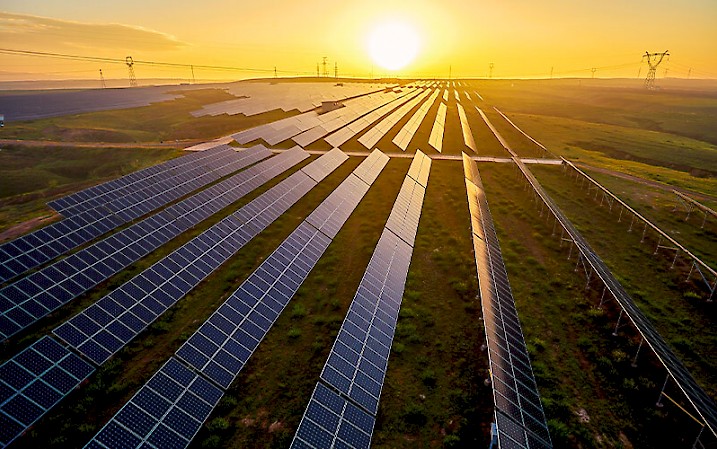
The world is rapidly turning to utility-scale solar to power its future. With global PV cumulative capacity exceeding 2.2 terawatts (TW) and solar accounting for 81% of all new renewable capacity added worldwide last year, the scale of solar development is immense. However, the inherently complex design process for utility-scale solar farms can, at times, present challenges, potentially affecting project timelines and limiting avenues for innovation. Involving more key decision makers upfront in the design process, supported by computational software, is now crucial for accelerating the clean energy transition.
“Effective utility-scale solar development demands a shared vision from concept to completion,” shares Paul Nel, Chief Executive Officer at 7SecondSolar. “Providing energy engineers, funders, developers, and EPC contractors with a common and consistent view of a project throughout the project life cycle, can significantly de-risk and speed-up project development. Accessible computational tools, like AUTOPV™, are the key to unlocking this broader and necessary collaboration.”
The value of involving decision makers early in solar design
For Energy Engineers:
Traditional solar design often forces engineers into time-consuming, repetitive tasks, limiting their ability to innovate. They frequently work with a single design iteration, missing opportunities for true optimisation. Advanced computational software, like AUTOPV™, liberates engineers from this constraint. They can rapidly explore countless design configurations, testing layouts and equipment options, in minutes, not months. This empowers them to focus on value engineering, pushing the boundaries of what’s possible for project cost, performance and yield.
For Funders and Investors:
Financial decisions in utility-scale solar are complex, with significant capital at stake. Investors and funders need clear insights into risk and return from the outset. Manual design processes are inherently error prone leading to potential underperformance of invested assets and often delays in execution. User-friendly computational software provides more accessibility for investors to understand the impact of design decisions of potential builds, and compare design costs across multiple scenarios. This enhanced visibility, including a significant reduction in human error, reduces financial uncertainty. It allows capital to flow more confidently into projects with de-risked financial models.
For Developers:
Developers need quick, reliable answers to assess project feasibility and drive timelines forward. Delays and inaccurate cost projections in early-stage design can hinder progress and impact project viability. Design software can accelerate this process significantly. It allows developers to quickly generate detailed design iterations for various site options, providing accurate projections in short timeframes. This speed is particularly valuable for streamlining other lengthy processes like environmental impact assessments (EIA).
“As the demand for utility-scale solar intensifies, having the early design stages accessible to more key decision makers is important to enable faster decision making.,” adds Nel. “By creating a more integrated and transparent design process, the industry can deliver projects faster, more cost-effective and less error prone, and also fundamentally better optimised.”
For more information on 7 Second Solar and AUTOPV™, please visit their website: https://www.7secondsolar.com/
steven
Show SEO & AI-citation metadata for this article
DemoEvery article carries this structured metadata so it surfaces in search and can be cited by AI answer engines. In the back end, a person posting fills these in, or the AI layer drafts them.