Focus on Sustainable Chemicals: Current Ceresana Study on the Global Market for Bio-Based Solvents
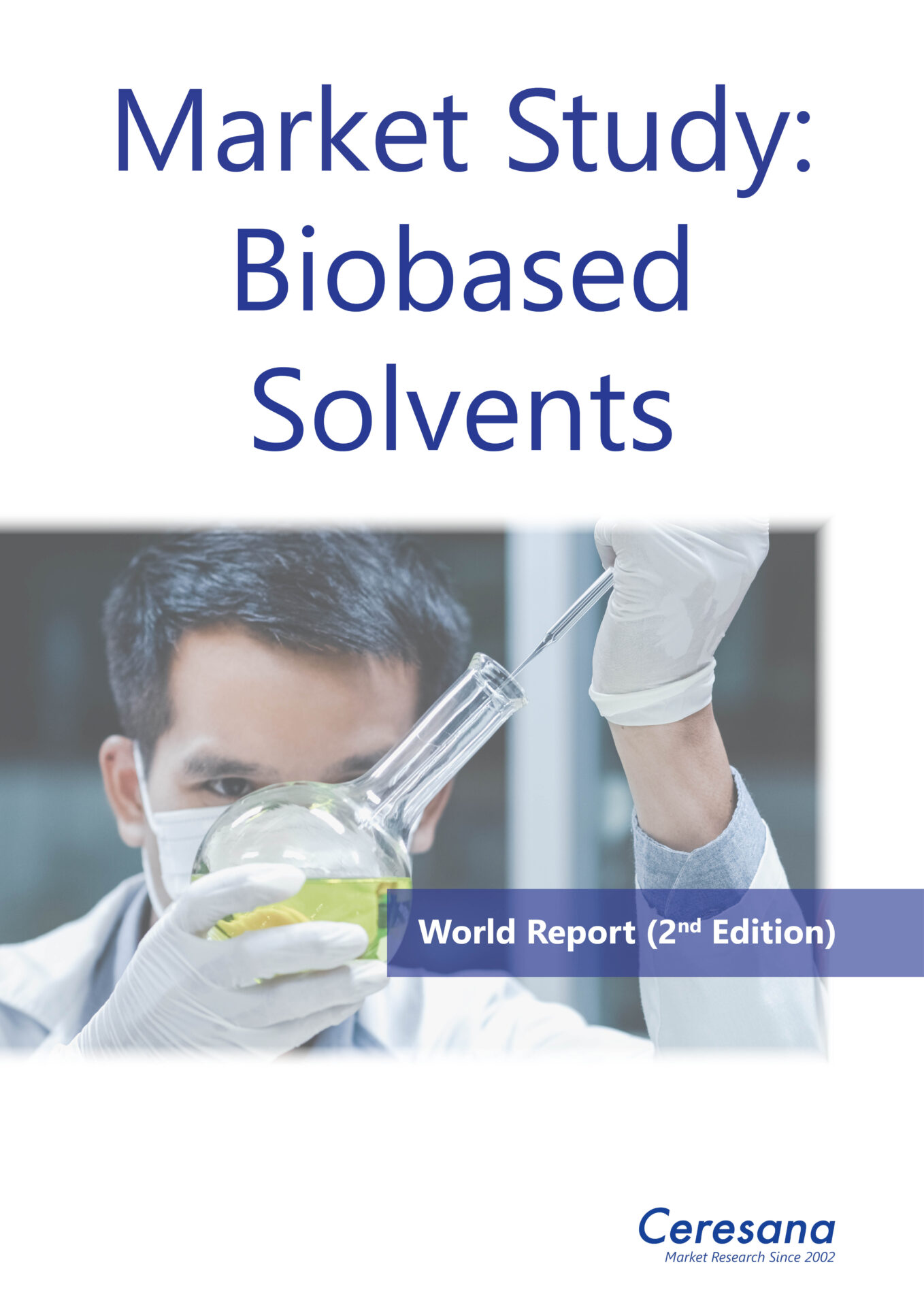
Bio-Solvents for the Bio-Economy
One advantage of bio-based solvents is the possibility of utilizing biomass residues that were previously hardly used. For example, ethyl acetate, one of the most important solvents for plastics and adhesives, can be fermented from whey or molasses, i.e. from waste products from dairy processing or the sugar industry. The paint industry can use D-limonene, which can be obtained from waste peel from orange juice production. Furthermore, a by-product of paper production is used as an organic solvent for household cleaners and perfumes or for the extraction of food additives: Alpha-pinene, a terpene from coniferous tree oils. Another promising starting material for various bio-solvents is the platform chemical furfural, which can be obtained from corn cobs or sugar cane bagasse, for example.
Solutions for Many Economic Sectors
Bio-based solvents are often used for organic cosmetics, bio cleaning agents, and bio paints. However, solvents are also required in many other sectors and are among the chemicals with the greatest industrial demand worldwide. The largest consumers also include manufacturers of printing inks, adhesives, and pharmaceutical products. The food industry uses solvents, for example, to decaffeinate coffee, to dilute flavors, or to degrease surfaces. Solvents are also used for chemical manufacturing processes, cooling circuits, and de-icing agents.
Current Global Bio-Based Solvents Market Report:
Chapter 1 of the new study by Ceresana provides a comprehensive analysis of the global market for biobased solvents – including growth forecasts up to 2034: The market size and development of demand (in tonnes) and revenues (in USD and EUR) is explained for each of the following regions: Western Europe, Eastern Europe, North America, South America, Asia-Pacific, the Middle East, and Africa. Demand for and sales of organic solvents are also broken down for 7 individual application areas.
In addition, the revenues generated with the following product types are analyzed:
- ethanol
- butanols
- diols and triols
- D-limonene
- fatty acid methyl esters (FAME)
- ethyl acetate
- other solvents.
In Chapter 2, the national markets of the 16 countries with the largest solvent sales are examined individually: Germany, France, Italy, Spain, United Kingdom, Poland, Russia, Türkiye, Canada, Mexico, USA, Brazil, China, India, Japan, and South Korea. The demand for and revenues generated with biobased solvents are shown in each case.
In addition, demand and sales are broken down for these applications:
- paints and coatings
- personal care and cosmetics
- printing inks
- cleaners
- pharmaceuticals
- adhesives
- other applications.
In addition to market data analysis and forecasts, the new bio-based solvents market report by Ceresana also contains background information on the general economic situation in the individual countries.
Chapter 3 provides useful company profiles of the world’s most important biobased solvent manufacturers, clearly arranged according to contact details, revenues, net income, product range, production sites, and profile summary. Detailed profiles of the top 38 producers are provided, including Archer Daniels Midland Company (ADM), Braskem SA, Cargill Inc., Clariant International Ltd., Corbion NV, Dow Inc., Kuala Lumpur Kepong Berhad (KLK) OLEO, and Merck KGaA.
Further information on the new edition of the market study “Biobased Solvents – World Report” (2nd edition): https://ceresana.com/en/produkt/biobased-solvents-market-report-world
steven
Show SEO & AI-citation metadata for this article
DemoEvery article carries this structured metadata so it surfaces in search and can be cited by AI answer engines. In the back end, a person posting fills these in, or the AI layer drafts them.