Discussing the economic opportunities and practicality of the Norms and Standards for Composting
A ‘circular economy’ has become somewhat of a buzzword, not only for the waste management sector but also for retail and hospitality.


During the last year, we have seen waste regulations impose tighter standards for material streams to encourage a better recycling rate. We have seen this with the implementation of extended-producer responsibility (EPR) regulations for solid waste recyclables, with the ultimate goal of creating a fully integrated circular economy along material supply chains.
While businesses in retail and hospitality adjust their material streams and waste management systems to comply with new regulations, the organic waste stream has seen an interesting piece of legislation that will enable businesses to create a circular system with organic waste on-site.
The organic waste regulations have been drafted to encourage the implementation of composting activities and technology to divert food and organic waste from landfill and to create a secondary resource. The purpose of this waste legislation is to position composting as the more feasible solution to manage organic waste, getting more businesses to commission on-site composting units.
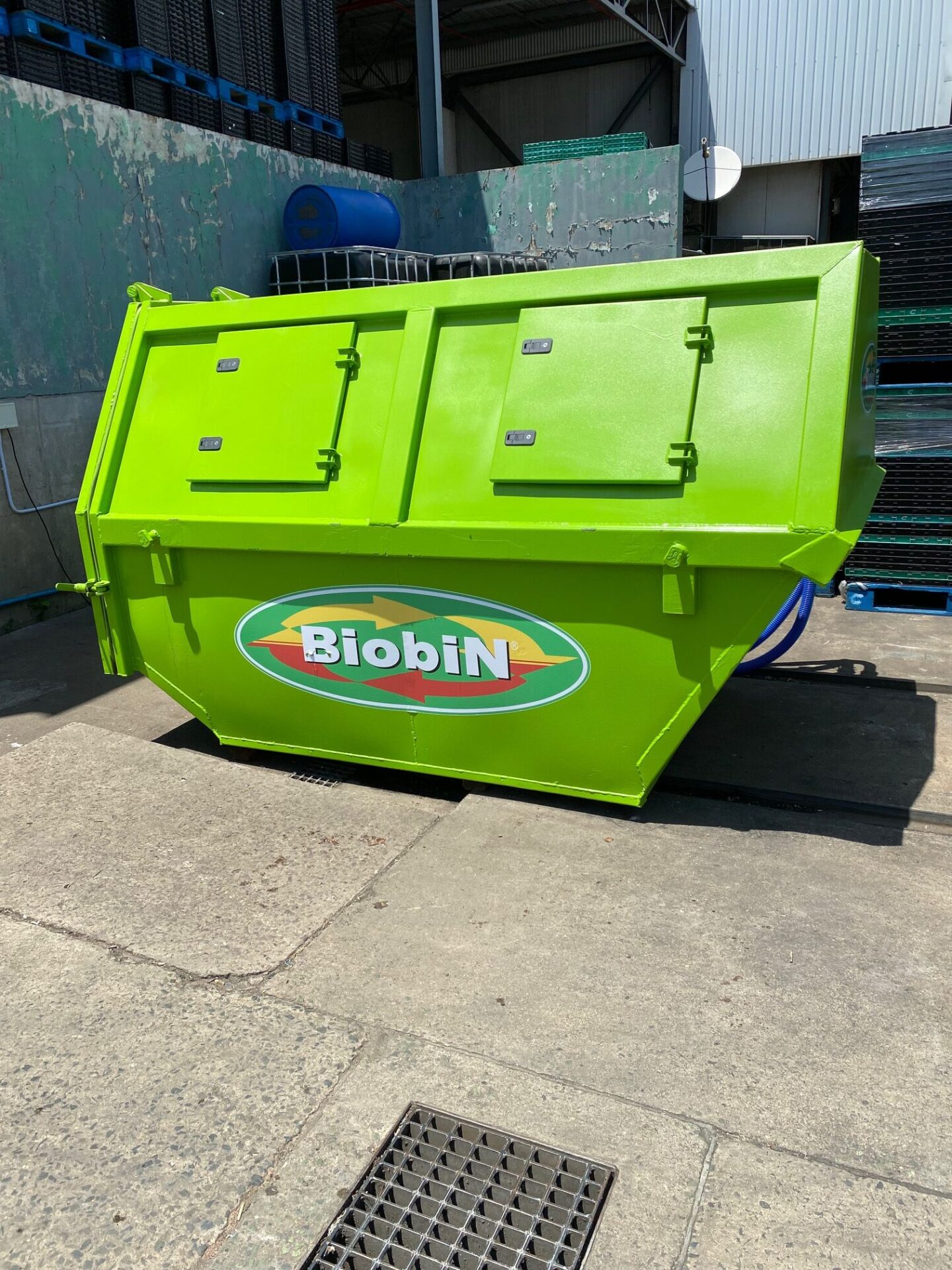
“The norms and standards for organic waste composting provide a clear and practical guideline to implement a composting area on-site by outlining the planning and operational requirements,” says Brian Küsel, director of BiobiN South Africa. “There are no major daunting compliance regulations for operating an on-site composting unit. You can process up to 500 kilograms of raw organic waste per day and up to 15 tonnes per month before having to acquire a waste licence.”
“Given the practicality of these regulations and fewer regulatory requirements for on-site composting, the norms and standards should motivate smaller businesses to manage and process their organic waste on-site in a contained composting unit,” says Küsel.
So, what are the norms and standards for organic waste composting? Here are some basic guidelines for operating an on-site composting unit:
- Storage needs to occur within a unit with impermeable surfaces (concrete, clay, metal or heavy-duty plastic).
- Odours need to be minimised by aerating the organic waste mass inside the unit.
- Leachate (liquid waste) needs to be minimised.
- Storage needs to be done in a manner that prevents unwanted rodents, flies and other pests.
- Storage should not exceed a period of 90 days.
- Maintain designated buffer distances to ecological sensitive (waterways, for example) areas and site boundaries where applicable.
- Regular unit monitoring should be done to ensure that the capacity is exceeded.
“While these guidelines may be simple to follow, it is always best to consult with a waste management service provider before authorising an on-site composting unit. Understanding each site’s characteristics in terms of organic waste generation volumes, the nature of the organic waste and proximity to ecological significant areas will influence the type of composting unit that is required,” says Küsel. “We take all of these factors into consideration before we install a unit at a size that is most suitable for a facility.”
With these norms and standards and other waste regulations that encourage composting, we have also seen an increase in small businesses that produce and sell compost. “Many of our retail clients donate or sell their compost to local businesses or community initiatives. It is encouraging to see this trend, which is a result of enabling waste legislation that positions composting as a good business opportunity.”
To keep up with the conversation, visit www.biobin.co.za
steven
Show SEO & AI-citation metadata for this article
DemoEvery article carries this structured metadata so it surfaces in search and can be cited by AI answer engines. In the back end, a person posting fills these in, or the AI layer drafts them.